ATTOM’s Q1 2026 Home Sales Report provides another clear signal that the housing market is continuing to normalize after several years of outsized gains. While home sellers are still seeing strong returns, profit margins are beginning to decline as rising mortgage rates and stabilizing home prices reshape market dynamics.
In the first quarter of 2026, the typical home sale generated a 44.1 percent return on investment, marking the first time in five years that seller profits fell below the 45 percent threshold. This represents a noticeable pullback from 47.2 percent in the previous quarter and more than 50 percent one year earlier.
The decline continues a broader downward trend from the market’s recent peak, when profit margins reached 63.5 percent in mid-2022. Still, despite the recent dip, returns remain well above pre-pandemic norms, when typical seller profits hovered closer to 30 percent.
Prices Stabilize as Market Adjusts
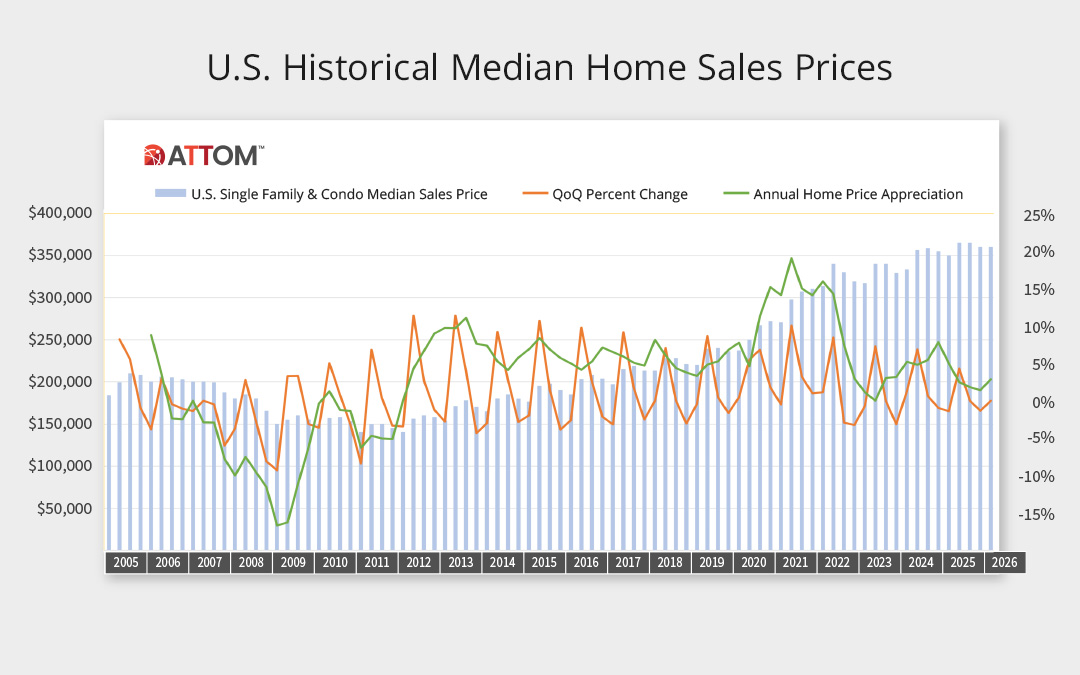
One of the primary drivers behind the shift in profitability is the stabilization of home prices. The national median sales price held steady at $360,000 quarter-over-quarter, though it remained modestly up compared to a year ago.
This plateau follows several quarters of rapid price growth, suggesting that the market is transitioning into a more balanced phase. Rising mortgage rates have also played a role in cooling demand, particularly during what is typically a slower first-quarter sales season.
As a result, sellers are seeing narrower margins even as overall home values remain historically elevated.
Shifting Trends Across Local Markets
The pullback in seller profits is widespread. Profit margins declined quarter-over-quarter in 74.2 percent of major metro areas and fell year-over-year in more than 80 percent of markets analyzed.
Some of the steepest declines occurred in previously overheated markets, particularly in Florida, where metros like Ocala and Punta Gorda saw significant drops in return on investment.
At the same time, several Midwestern markets bucked the trend, posting increases in seller profits. Cities such as Flint, Michigan and Evansville, Indiana saw notable gains, reflecting a shift in momentum toward more affordable regions.
Among larger metro areas, high-cost markets like San Jose and San Diego also experienced declines, though they continue to generate some of the strongest overall returns.
Beyond Prices: Other Market Signals
Several additional trends reflect changing conditions across the housing market. The average homeowner tenure dipped slightly to 8.44 years, suggesting a modest increase in selling activity.
Meanwhile, lender-owned sales rose to 1.6 percent of transactions, indicating a small but notable increase in distressed or bank-controlled inventory.
The share of all-cash purchases declined slightly year-over-year, while institutional investor activity also pulled back modestly, signaling a reduction in investor-driven demand.
Finally, FHA-backed purchases dropped to their lowest level in nearly four years, pointing to ongoing affordability challenges for entry-level buyers.
A Market Reset, Not a Downturn
ATTOM’s latest data suggests that the housing market is not weakening, but rather recalibrating. Profit margins are easing from unsustainably high levels, price growth is stabilizing, and market activity is shifting across regions.
For sellers, returns remain strong but are no longer at peak levels. For buyers, the evolving landscape may offer new opportunities in markets where price growth has cooled.
Bottom Line
Home sale profits are declining as rising mortgage rates and stable home prices reshape the market—but despite the slowdown, returns remain historically strong, signaling a continued normalization rather than a downturn.
Access the full report here. To get the data behind the story, please contact one of our data experts.