
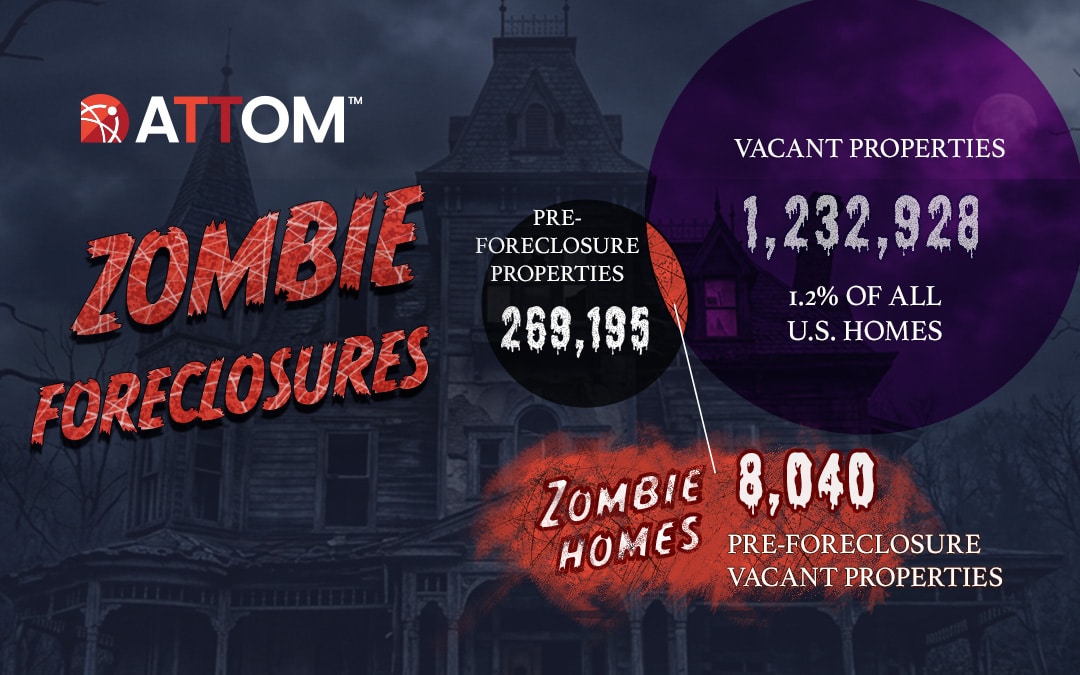
The national vacancy rate declined to 1.2 percent; Zombie home rate dropped slightly to 3 percent
IRVINE, Calif. – October 29, 2026 —ATTOM, the leading provider of property data, AI-powered intelligence, and real estate analytics solutions, the leading provider of property data, AI-powered analytics, and real estate intelligence solutions, today released its latest Vacant Property and Zombie Foreclosure Report showing that 1.2 percent of residential properties in the United States were vacant in the final quarter of the year. That was down from 1.3 percent in the third quarter and in the same quarter last year.
The report analyzes publicly recorded real estate data collected by ATTOM — including foreclosure status, equity and owner-occupancy status — matched against monthly updated vacancy data. (See full methodology below).
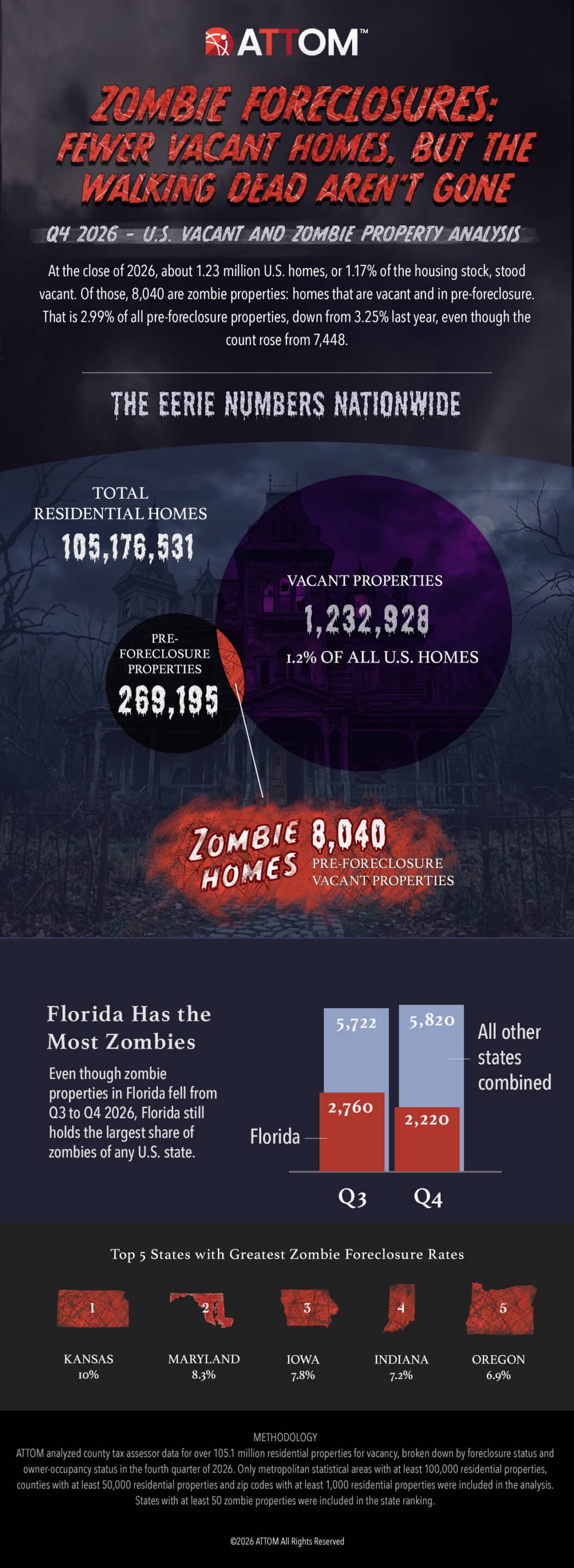
There were 269,195 properties in the foreclosure process in the fourth quarter, out of 105.1 million total properties analyzed. Of those properties in foreclosure, 3 percent, or 8,040 properties, were “zombies,” meaning the owners had abandoned the homes before the conclusion of the foreclosure proceedings. The fourth-quarter zombie rate was down from 3.3 percent in the prior quarter and in the same quarter last year.
“The fourth-quarter data showed modest declines in both vacancy and zombie foreclosure rates nationwide,” said Rob Barber, CEO of ATTOM. “While trends vary from state to state, vacant and abandoned homes continue to represent a relatively small share of the nation’s housing stock.”
Zombie homes on rise in majority of states
The number of zombie properties rose quarter-over-quarter in 29 states.
Among states with at least 50 zombie properties in the fourth quarter, the largest quarter-over-quarter increases were in Wisconsin (up 20.9 percent to 52 zombie properties), Maryland (up 19.2 percent to 180 zombie properties), Pennsylvania (up 17.2 percent to 252 zombie properties), Texas (up 15.7 percent to 192 zombie properties), and North Carolina (up 15.2 percent to 129 zombie properties).
The states with sufficient data to analyze and that had the largest declines in zombie properties were Arizona (down 34.9 percent to 56 zombie properties), Florida (down 19.6 percent to 2,220 zombie properties), California (down 10.4 percent to 267 zombie properties), South Carolina (down 9.6 percent to 141 zombie properties), and Oklahoma (down 8.9 percent to 82 zombie properties).
Vacancy rates below half a percent in much of Northeast
The states with the highest overall home vacancy rates in the fourth quarter were Oklahoma (2.4 percent), Kansas (2.3 percent), Alabama (2.1 percent), West Virginia (2.1 percent), and Missouri (2 percent).
The lowest vacancy rates were in New Hampshire (0.3 percent), Vermont (0.4 percent), New Jersey (0.4 percent), Connecticut (0.4 percent), and Idaho (0.5 percent).
Ten metro areas posted no zombie properties
There were 164 metropolitan statistical areas with sufficient data to include in ATTOM’s analysis, meaning they had at least 100,000 residential properties and at least 50 properties in the foreclosure process. The metro areas with the highest zombie rates were Baltimore, MD (13 percent); Youngstown, OH (13 percent); Akron, OH (11.5 percent); Cedar Rapids, IA (10.7 percent); and Scranton, PA (9.4 percent).
Ten of the metro areas had no zombie properties, the largest of which were Bridgeport, CT; El Paso, TX; Little Rock, AR; Fayetteville, AR; and Visalia, CA.
Vacancy rates higher among investor-owned properties
Institutional investors held 30.6 million homes in the fourth quarter, of which 2.7 percent, or 840,384, were vacant.
The states with the highest vacancy rates for investor-owned homes were Indiana (6.5 percent), Alabama (5.8 percent), Oklahoma (5.4 percent), Kansas (5.2 percent), and Louisiana (5.1 percent).
The lowest vacancy rates for investor-owned properties were in New Hampshire (0.6 percent), Vermont (0.9 percent), Utah (0.9 percent), Hawaii (1 percent), and New Jersey (1.1 percent).

Zombie rates high in several Baltimore, Indianapolis zip codes
There were 2,585 zip codes with sufficient data to be included in ATTOM’s analysis, meaning they had at least 1,000 residential properties and at least 25 in foreclosure in the fourth quarter. Of those, the highest zombie rates were in 21205 in Baltimore, MD (42.5 percent); 21223 in Baltimore, MD (40 percent); 46201 in Indianapolis, IN (32.3 percent); 46218 in Indianapolis, IN (32.3 percent); and 13619 in Carthage, NY (32.1 percent).
Conclusion
ATTOM’s fourth quarter vacancy and zombie home report found that the national vacancy rate fell slightly from the previous quarter to 1.2 percent. The national zombie home rate also dropped to 3 percent.
Report Methodology
ATTOM analyzed county tax assessor data for over 105.1 million residential properties for vacancy, broken down by foreclosure status and owner-occupancy status in the fourth quarter of 2026. Only metropolitan statistical areas with at least 100,000 residential properties and 50 properties in pre-foreclosure, counties with at least 50,000 residential properties and zip codes with at least 1,000 residential properties and 25 in pre-foreclosure were included in the analysis.
Report Definitions
Vacant Rate
The percentage of all residential properties that are unoccupied at the time of analysis, regardless of foreclosure status or ownership type.
“Zombie” Foreclosure Rate (Pct Pre-Foreclosures Vacant)
The percentage of properties in the foreclosure process that are vacant because the owner has abandoned the property prior to the foreclosure being completed.
Vacant Investment Rate
The percentage of investor-owned residential properties that are unoccupied, measured against the total number of investor-owned homes.
Vacant Bank-Owned (REO) Rate
The percentage of bank-owned (REO) residential properties that are vacant after foreclosure has been completed and ownership has transferred to the lender.
About ATTOM
ATTOM delivers AI-driven property intelligence built on the nation's most trusted property data repository, covering 160+ million U.S. properties—99% of the population. Our engineered, multi-sourced, semantically rich real estate data spans property tax, deeds, mortgages, foreclosure, environmental risk, property conditions, natural hazards, neighborhood insights, and geospatial boundaries, rigorously validated for advanced analytics. ATTOM supports analytics, AI applications, and AI agents through flexible delivery options including APIs, bulk licensing, cloud delivery, and the MCP Server for AI-powered, agentic access to engineered property data, enabling organizations to automate analysis, power intelligent workflows, and scale property intelligence across industries.
Media Contact:
Megan Hunt
megan.hunt@attomdata.com
Data and Report Licensing:
949.502.8313
datareports@attomdata.com

