
Contents
What Is ATTOM Nexus?
The Risks of Data Uncertainty
Productivity Benefits of Data Discovery Before Commitment
The Value of Self-Service Property Intelligence
The ATTOM Difference
It’s easy to find a property data provider. It’s much harder to know whether the data will actually meet your needs once it’s in your system.
Too often, organizations commit to contracts based on limited trials, static samples, or high-level sales conversations. Only after integration begins do gaps in coverage, schema mismatches, or data quality issues become clear. At that point, the cost of rework can be significant.
ATTOM Nexus was built to solve that problem.
What Is ATTOM Nexus?
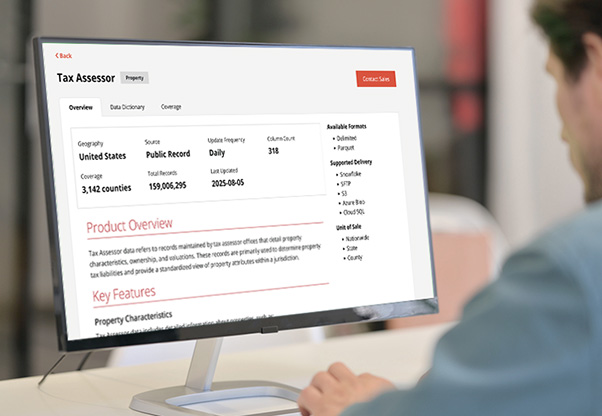
ATTOM Nexus is a self-service data discovery platform that allows organizations to explore, evaluate, and understand ATTOM datasets before integration.
Instead of relying on limited previews or assumptions, users can work directly with the data environment. They can search records, review metadata, analyze geographic coverage, and understand how datasets are structured, helping them determine whether the data is the right fit for their use case.
By making these insights accessible upfront, ATTOM Nexus helps organizations reduce uncertainty and make more informed decisions before committing time, budget, or resources.
The Risks of Data Uncertainty
Evaluating property data has traditionally been difficult. Many providers offer trial periods, but these are often limited in scope, short in duration, or based on static datasets that don’t reflect real-world usage.
As a result, critical decisions are made without a clear understanding of:
- Data quality and completeness
- Geographic coverage and gaps
- Schema structure and field relationships
- How the data will perform in production workflows
Without visibility into these factors, organizations risk selecting data that does not align with their needs, leading to delays, added costs, and internal friction during implementation.
ATTOM Nexus addresses these challenges by providing transparency before a commitment is made.
Why Data Discovery Before Commitment Matters
Giving teams the ability to explore and evaluate data early has practical, measurable benefits across industries.
A mortgage lender, for example, can review property characteristics, ownership data, and valuation inputs to confirm alignment with underwriting models before moving forward. A real estate or investment firm can analyze market coverage and neighborhood-level data to ensure it supports their strategy. An insurance company can assess property condition and hazard-related attributes to validate underwriting assumptions.
In each case, the outcome is the same: faster internal alignment, fewer surprises during integration, and greater confidence in the final decision.
A key differentiator of ATTOM Nexus is its self-service approach.
Instead of relying on a guided sales process, data and engineering teams can independently explore ATTOM datasets and evaluate how they will work within their own environments. This includes:
- Reviewing dataset structure and field-level detail
- Understanding coverage at national and county levels
- Exploring metadata, update frequency, and source information
- Evaluating how datasets are delivered across supported formats and platforms
This level of transparency allows teams to move at their own pace, ask better technical questions, and validate decisions based on real information rather than assumptions.
The ATTOM Difference
ATTOM Nexus reflects a broader shift in how property data should be evaluated and consumed.
Rather than focusing only on access, it prioritizes understanding. Organizations are no longer forced to commit first and discover limitations later. They can assess data quality, coverage, and usability upfront, before integration begins.
That shift reduces risk, accelerates onboarding, and leads to better long-term outcomes.
FAQ
What is ATTOM Nexus?
ATTOM Nexus is a self-service data discovery platform that enables organizations to explore, evaluate, and understand ATTOM’s property datasets before integrating them into their systems.
How does ATTOM Nexus reduce risk?
It provides visibility into data quality, coverage, and schema structure before a contract is signed, helping organizations avoid costly rework and misaligned expectations.
Who should use ATTOM Nexus?
Data teams, product managers, analysts, and technical buyers evaluating property data for integration, analytics, or product development.
What does “self-service” mean in this context?
Users can independently explore datasets, review metadata, and assess coverage without relying solely on guided demos or sales materials.
Can users evaluate delivery formats?
Yes. ATTOM Nexus allows users to understand how datasets are structured and delivered across supported platforms and formats, helping teams plan for integration.
